
‘Bou HQ: Author Jack El-Hai went from Uptown Caribou to Hollywood
Welcome to ‘Bou HQ* – Caribou Coffee’s ongoing series of spotlight entrepreneurs whose best ideas started where community happens – over coffee. In this edition, we sat down with Twin Cities writer and long-time Uptown Minneapolis resident, Jack El-Hai to hear about his work, creative process and of course, his love of coffee.
‘Bou HQ: Jack, you’re a long-time resident of Uptown Minneapolis. Has this always been home?
Jack El-Hai: I’ve been here a long time, but I grew up in Los Angeles. I came out here to go to school at Carleton and fell in love with two things: the area and writing. The Twin Cities is a great community for writers, artists and creatives. I had started writing fiction during college and afterwards, but then a classmate and friend got a job at Minneapolis St Paul magazine. She encouraged me to write for the magazine – and that’s how this all began. I wrote for other local magazines as a journalist and by the 1990s was contributing to national media too.
‘Bou HQ: How and when did you make the jump to focus on writing books?
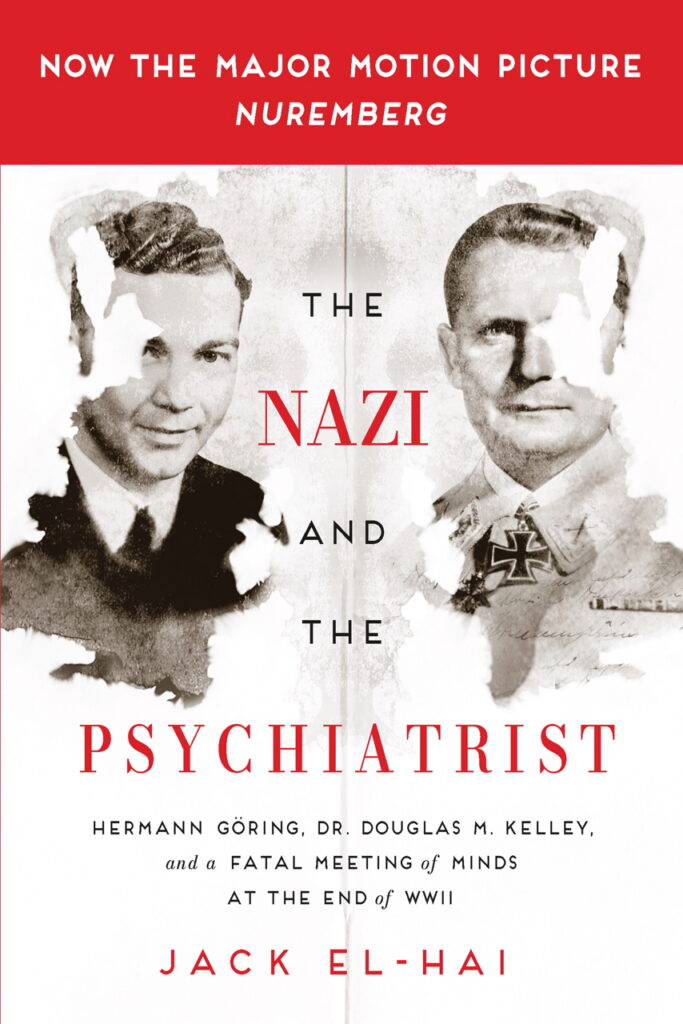
Jack: The book I’m working on now – after many others – is the first I’ve been able to focus on full time. Like many working writers, we’re juggling projects and interests, and in the early days, paying the bills with what we do. The success of The Nazi and the Psychiatrist and its recent adaptation into the movie Nuremberg helped with that, of course.
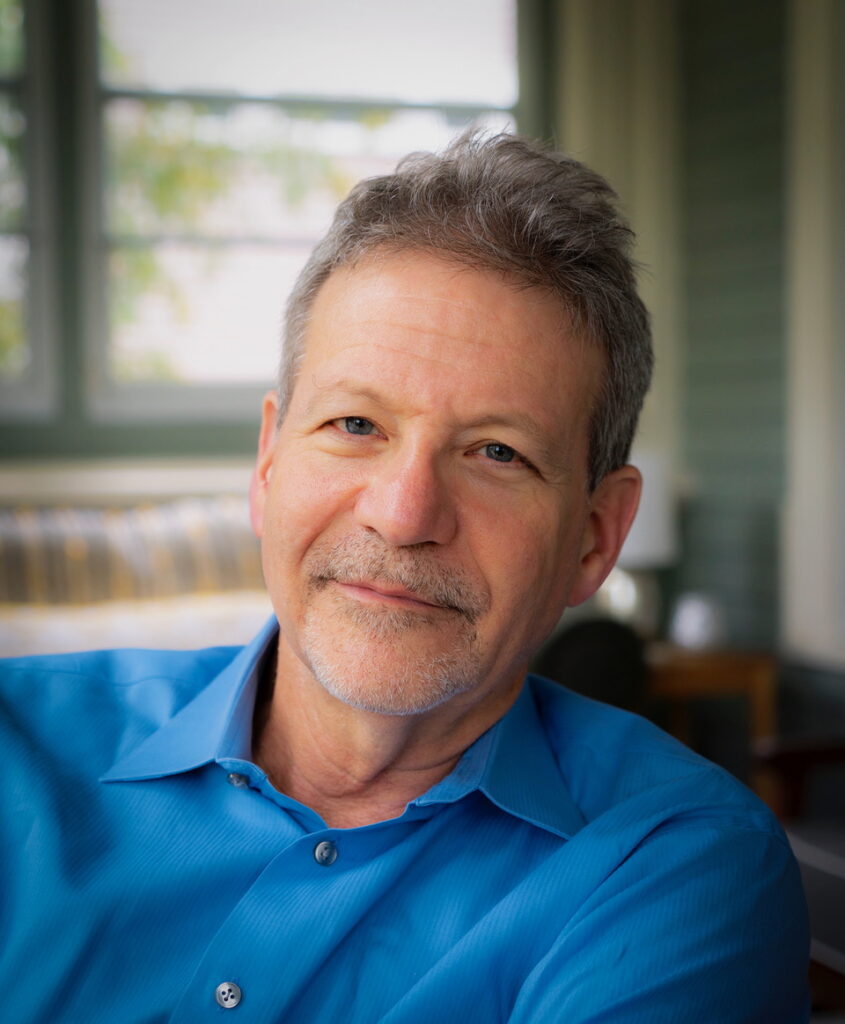
‘Bou HQ: You spent nearly twenty years writing inside one Caribou. What made that coffeehouse such a meaningful part of your creative process?
Jack: I lived within walking distance of the Caribou at 24th and Hennepin, so it became the natural center of my workday. I’d arrive around nine or nine-thirty, settle in at a table I liked, and write until just before lunch. Over time I got to know the staff and many of the regulars. There was a sense of community even though everyone was doing their own thing. I probably wrote three quarters of The Nazi and the Psychiatrist in that Caribou.
‘Bou HQ: You’re famous for doing meticulous research into the topics and subjects for your books. Tell us how did you get the idea for this book in particular?
Jack: While researching another book, I learned about the story of Dr. Douglas Kelley—the psychiatrist in what would later become my book. He was the psychiatrist tasked with assessing Hermann Goering’s mental state to stand trial. I had learned that he had left about fifteen boxes of materials, and they were sitting untouched for decades. I contacted his oldest son, visited him, and found he kept the boxes in his basement. I knew right away that this goldmine could be the basis of a compelling book. Typically, I begin by writing an article to test the idea, and I did that here too—and started work on an article for Scientific American Mind in 2011.
‘Bou HQ: And then there was the long journey from book to film. What was that like?
Jack: Long, unpredictable, but ultimately very fulfilling. I sent the article to a production company that had optioned my previous book, The Lobotomist. One of the partners, James Vanderbilt, read it and wanted to adapt it immediately. He started writing drafts almost right away. Then the original production company dissolved, and years passed with no movement. I saw four different drafts along the way over the years. Things only reignited when James partnered with Bluestone in 2023. Suddenly the project came together quickly. Watching the finished film, Nuremberg, for the first time felt both thrilling and otherworldly. It’s remarkable to see another creative take on something you wrote and what is built from it. Plus, the finished film is factual enough to convey the heart of the story I had written, which meant a lot to me.
‘Bou HQ: A lot of writers would be tempted to shift toward screenwriting after an experience like that. Have you?
Jack: Not at all. My work resonates with people, I think, when I follow what genuinely interests me. That’s narrative nonfiction: the history of medicine, true crime, but also stories that you can tell through scenes and relationships. If I started chasing screenwriting, it would undermine that authenticity. I know what kind of storytelling feels real to me, and that’s what I intend to keep doing.
‘Bou HQ: Do you still write in Caribou?
Jack: No, sadly. In 2020 when COVID closed so many places, I moved home. I tried to make my home office feel like the Caribou space I knew—comfortable, warm, familiar. Less like a workspace and more like a place you want to settle into. One of the first things I realized was that I’d have to make my own coffee, which I did, out of necessity, but it’s not the same.
I still write here now. It works well, but I’ll admit the one thing I haven’t fully replaced is the feeling of arriving somewhere that already has hot coffee and a community ready for you.
‘Bou HQ: What’s your drink of choice when you do stop in at a Caribou?
Jack: I’m a dark-roast person through and through.
‘Bou HQ: After all these projects, what does a good writing space mean to you?
Jack: It’s about community and connectedness. Not in a literal way—you’re not collaborating with the people in the coffee shop—but in the sense that you don’t feel isolated while you’re doing solitary work. A good writing space gives you comfort, atmosphere, and routine. It helps you think. Whether it’s in a neighborhood coffee shop or a home office modeled after one, I still work best with a dark roast close at hand.
‘Bou HQ: What’s next on the writing to-do list, Jack?
Jack: Well, I’ve written and published three books since The Nazi and the Psychiatrist came out. The Lost Brothers, a true crime book about the disappearance of two brothers in the 1950s, was published in 2019, and in 2025 I published Face in the Mirror. It tells the story of a face transplant patient at the Mayo Clinic. I also just finished writing The Case of the Autographed Corpse, about the wrongful conviction of an Apache medicine man in 1933. That book comes out in the fall of 2026. I’m keeping busy. There’s always another story to discover and bring to light.
Final sip
At ‘Bou HQ, we celebrate innovators who turn coffeehouse conversations into companies and projects that connect people. If you have a story of a business idea or your next big thing that was sparked at a Caribou coffeehouse, we’d love to hear from you. Submit your story – and you could be featured in an upcoming edition.
*The opinions expressed in this story are those of the individual or organization featured, and do not necessarily reflect the view of Caribou Coffee. Caribou Coffee is not affiliated, does not endorse, or receive a benefit from any organization, business, or individual featured in ‘Bou HQ. All photos are used with permission and remain the property of their respective owners.